


ASPROVA APS: the production scheduling system used in over 4,000 factories worldwide
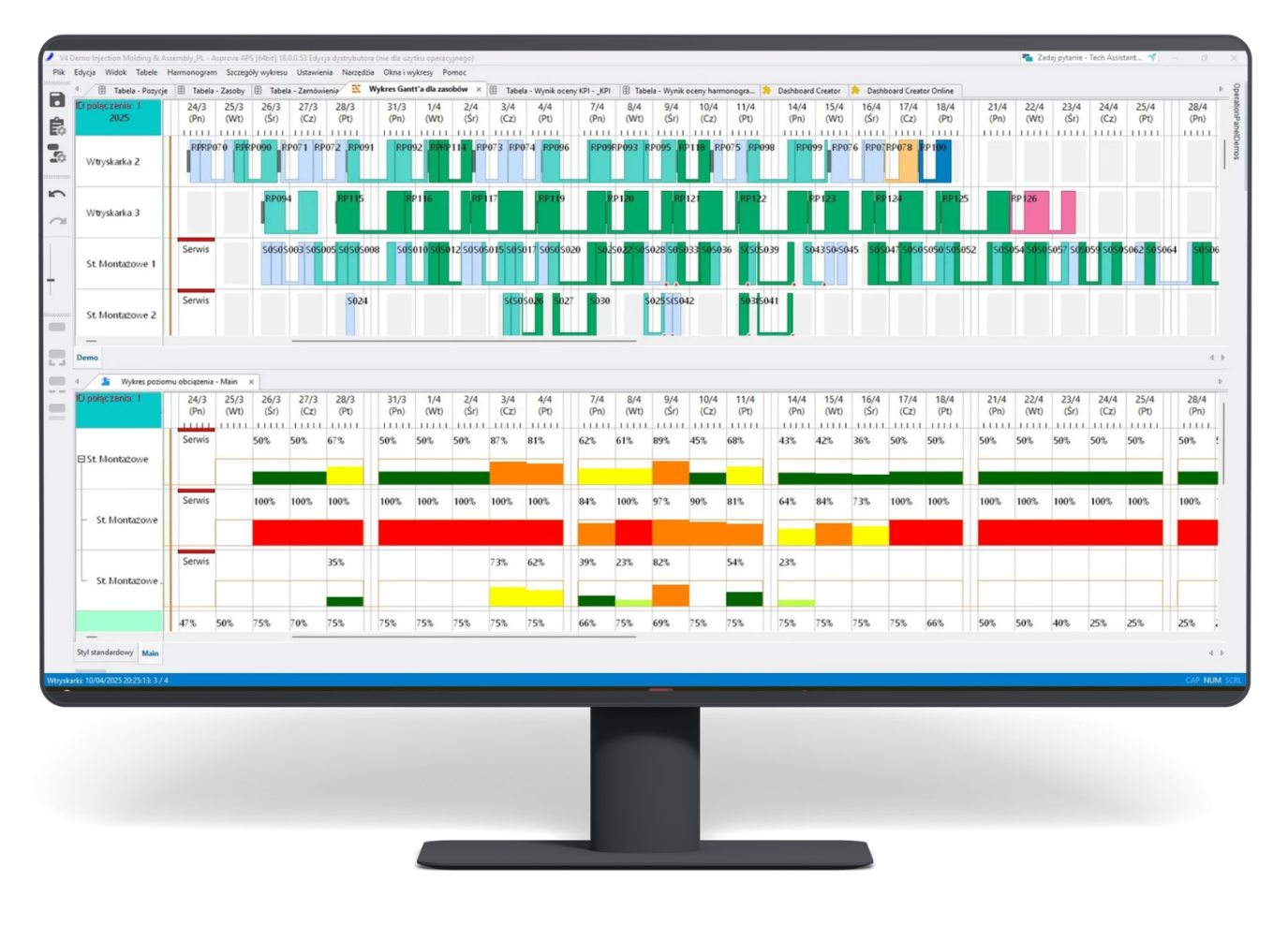
ASPROVA APS creates a feasible production schedule in seconds, built for plants that plan hundreds or thousands of operations a day and need a system that responds to changes in real time.
ASPROVA APS is an Advanced Planning and Scheduling system that stands out for its high computational performance: it recalculates 100,000 operations in under a minute, taking into account 100% of your company’s parameters.
ASPROVA APS lets you quickly update your plan whenever resource availability, materials or production priorities change. ASPROVA APS integrates with any ERP or MES system, ensuring a smooth workflow across your production processes.
Who Is ASPROVA APS For?
ASPROVA APS is built for manufacturers where Excel or standard ERP planning is no longer enough to create realistic production schedules.
The system is especially valuable when:
• scheduling takes many hours or even days,
• every breakdown, order change or material shortage requires manual rescheduling,
• your ERP doesn’t account for all shop floor constraints,
• production involves multiple stages, resources, technologies and priorities,
• your company needs shorter lead times, better on-time delivery and tighter inventory control,
• the plan has to be updated more than once a day.
ASPROVA APS supports manufacturing plants across industries including automotive, electronics, FMCG, cosmetics, metalworking, packaging and prefabrication.
Implementation Results: What eq system Clients Gain
Within the first months of implementing ASPROVA APS, eq system clients achieve measurable results: less time spent preparing advanced production plans, lower work-in-progress (WIP) levels, higher OTIF and improved on-time delivery.
| Company | Industry | ASPROVA APS implementation result |
|---|---|---|
| Fabryka Silników Elektrycznych BESEL S.A. | Electrical machinery | Share of unfulfilled plan items down by 6.31 percentage points. |
| CHM sp. z o.o. | Medical manufacturing | Average production order lead time reduced by around 50%. |
| Strauss Cafe Poland | Food | Inventory levels reduced by approx. 52%. |
| Formaster Group | FMCG | 10–15% increase in production output while maintaining the same... |
Why Asprova and Not Another APS System?
ASPROVA APS stands out with three things no competitor can match: world-class computing speed, full configurability without programming and more than 4,000 implementations worldwide as proof of the product’s maturity.
The World's Highest Computing Performance (5,000 Operations in 3 Seconds)
The key advantage of ASPROVA APS is its unmatched speed, built on carefully engineered, highly efficient algorithms that quickly generate realistic, feasible production schedules. This lets you update your production schedule instantly, so it always reflects the current situation. With the computing power to allocate 100,000 operations in under a minute while taking into account every relevant parameter of each production order, ASPROVA APS is positioned as the world’s fastest production scheduling system.
99.9% Configurable Without Involving Your IT Department
Implementing ASPROVA APS (Advanced Planning and Scheduling) for production planning requires no programming, as 99.9% of the setup is done by configuring the software’s standard parameters. Users can maintain and develop the system on their own, including building their own scheduling functions. Every element is configured directly from the user panel. ASPROVA APS interface tools make it easy to connect with any external system, such as ERP, WMS, MES, CMMS or BI.
ASPROVA vs ERP vs Excel
APS, ERP and Excel all support production planning, but at different levels of detail. Excel works well for simple overviews and manual planning, ERP organises data on orders, materials and deadlines, while an APS system builds a schedule that accounts for real production constraints, such as the availability of machines, people, tools and materials, as well as process dependencies. That is why APS does not replace ERP, but complements it in the area of advanced production planning and scheduling.
| Criterion | Excel | ERP | ASPROVA APS |
|---|---|---|---|
| Accounting for machine constraints | manual | partial | automatic |
| Accounting for material availability | manual | yes, but usually without full scheduling | yes, linked to the production plan |
| Response to breakdowns and order changes | manual rescheduling | limited | fast schedule recalculation |
| What-if simulations | none or very limited | limited | multi-variant plan scenarios |
| Plan visualisation | depends on the spreadsheet | limited | Gantt chart and planning views |
| Integration with production | none | depends on the system | ERP, MES, WMS, CMMS, BI |
| Self-service configuration | yes, but without process control | limited | 99.9% of settings without programming |
Explore the Features of ASPROVA APS: Production Planning and Scheduling Software
Below are the key capabilities of ASPROVA APS. Extensive configuration options for all of its features let you solve the specific planning challenges that planners in manufacturing plants struggle with.
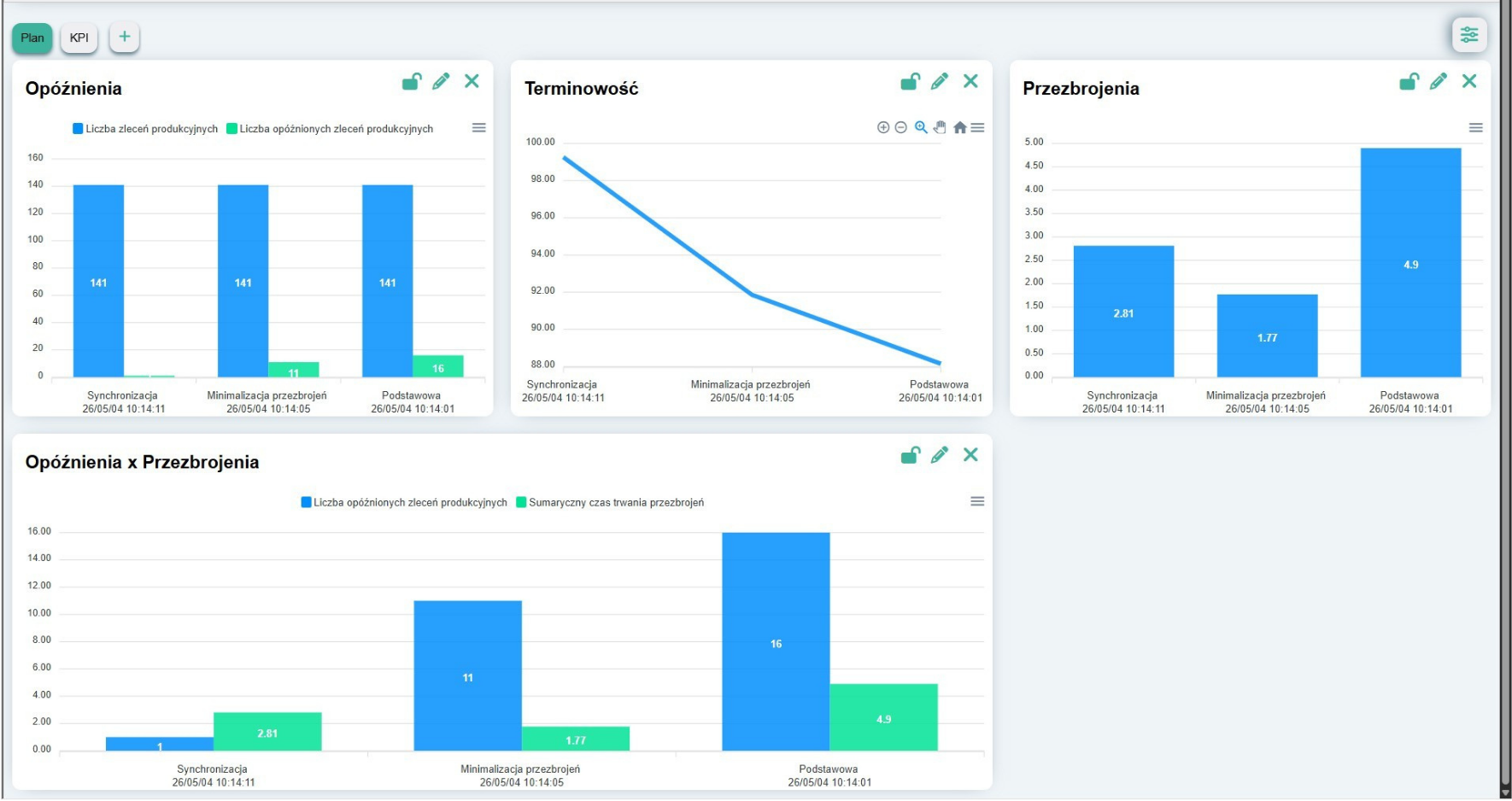
Schedules That Account for All Resource Constraints
ASPROVA APS production planning software creates a production schedule that can actually be executed, not one that only looks right on paper. The system takes into account constraints related to machines, resources, processes, materials and orders to deliver a plan that works under real production conditions.
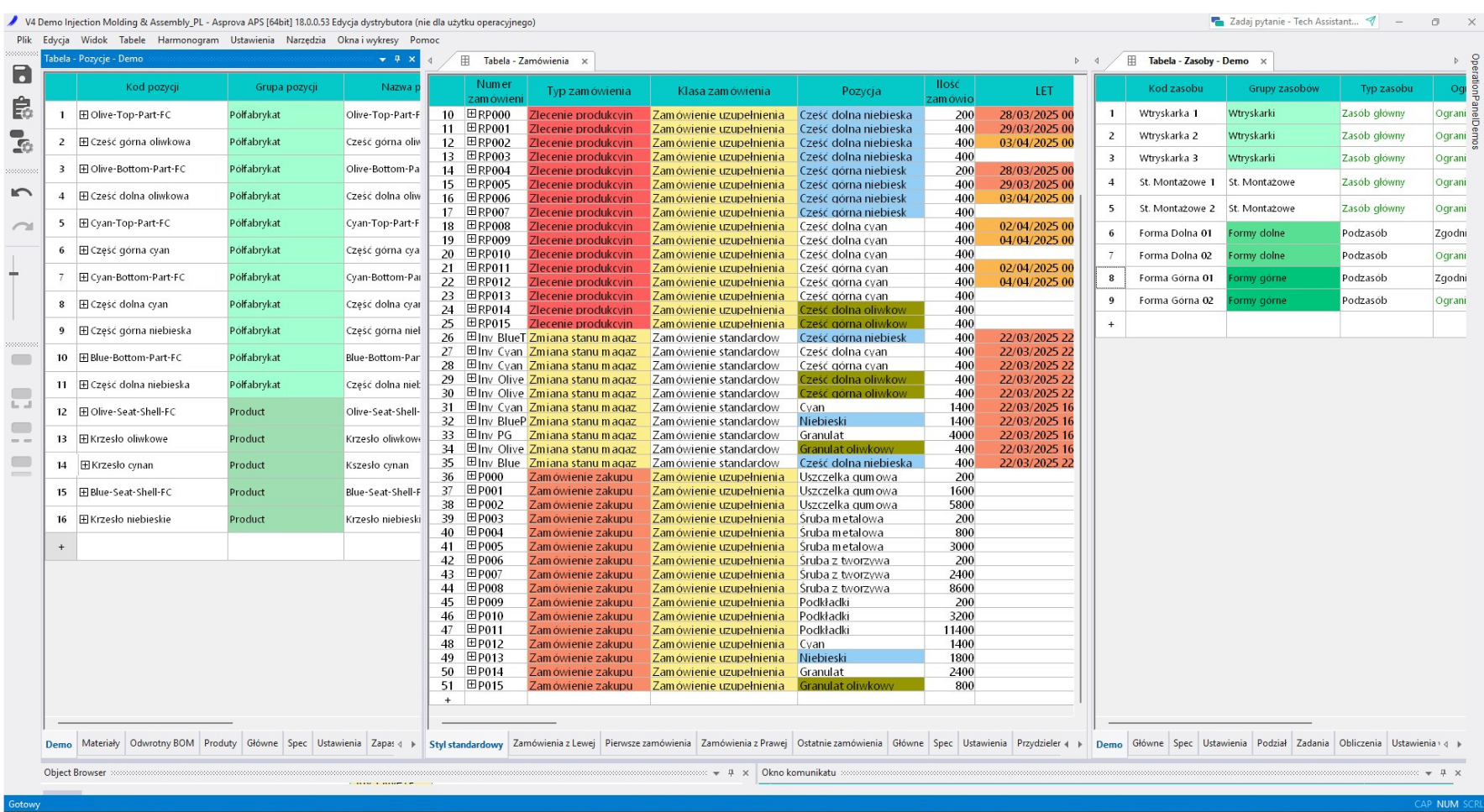
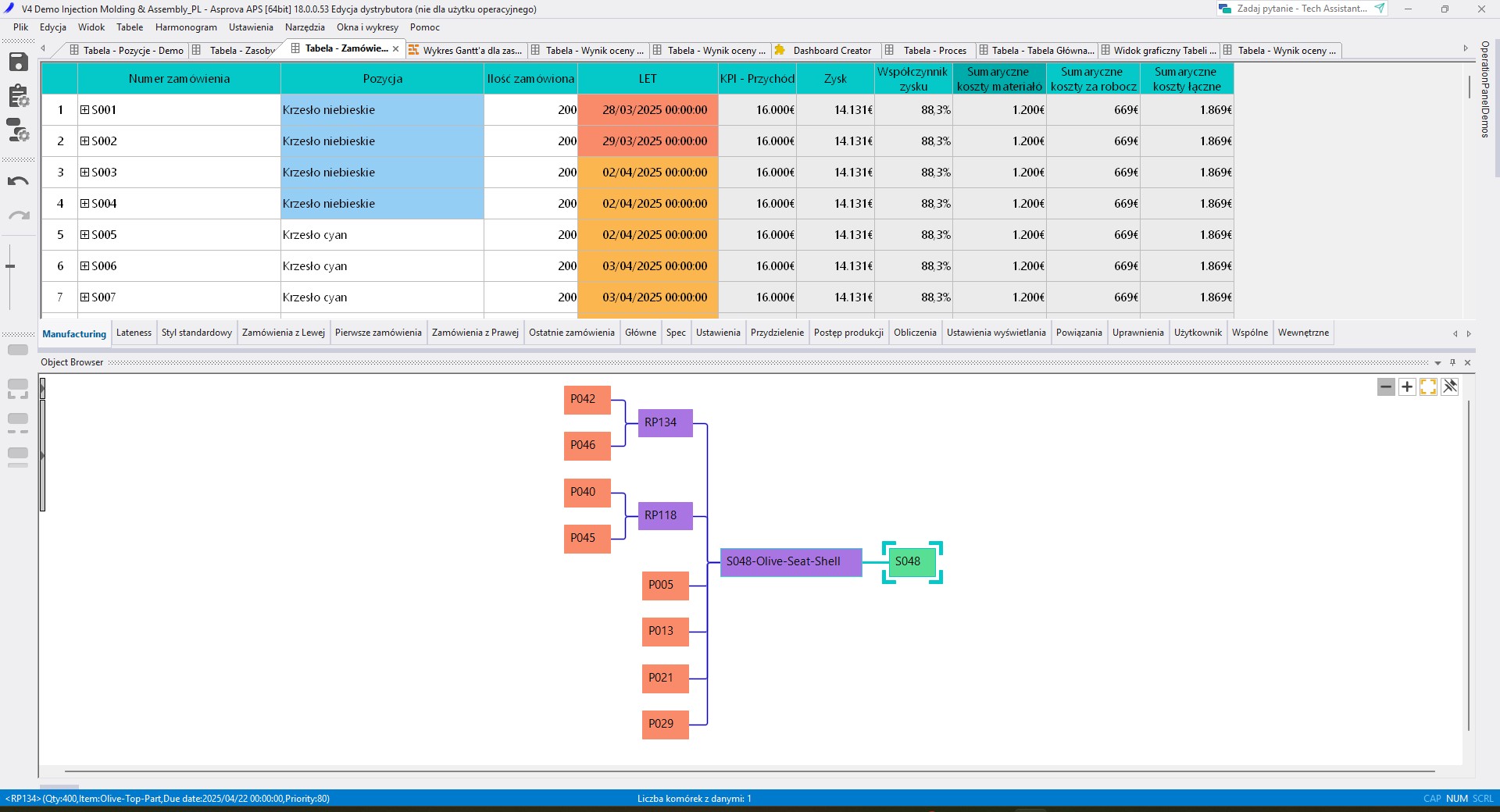
Planning is based on an accurate model of your production processes and the constraints that affect order execution. ASPROVA APS analyses data on resources, material availability and orders, then uses scheduling algorithms to prepare a feasible schedule.
The system supports multi-level production planning, as it takes into account the dependencies between operations, resources and processes.
How Does ASPROVA APS Build a Schedule Based on Real Production Constraints?
ASPROVA APS builds a production schedule based on the specifics of individual processes, the dependencies between operations and your optimisation criteria. The system takes into account the conditions that shape how production actually runs, while the planner defines rules and constraints for individual areas of the plant.
In ASPROVA APS, the planner defines, among other things:
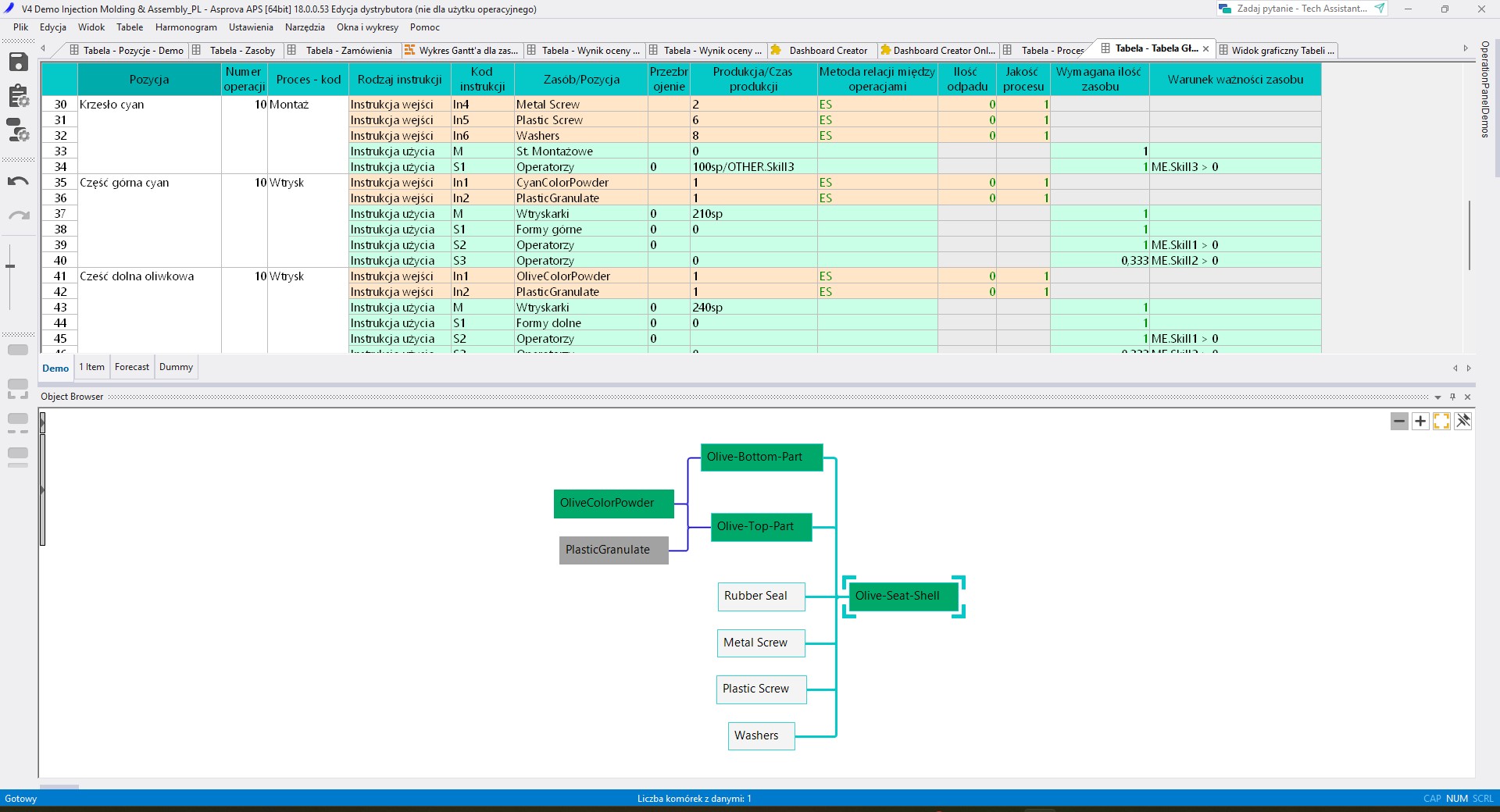
- production routings,
- relationships between individual tasks and operations,
- production tools and their availability,
- employee skills,
- resource, product and raw material parameters,
- maintenance-related constraints.
As a result, the system arranges the production plan not only by order due dates, but also by the actual process, resource and organisational dependencies within the plant.
Gantt Chart and Real-Time KPI Monitoring
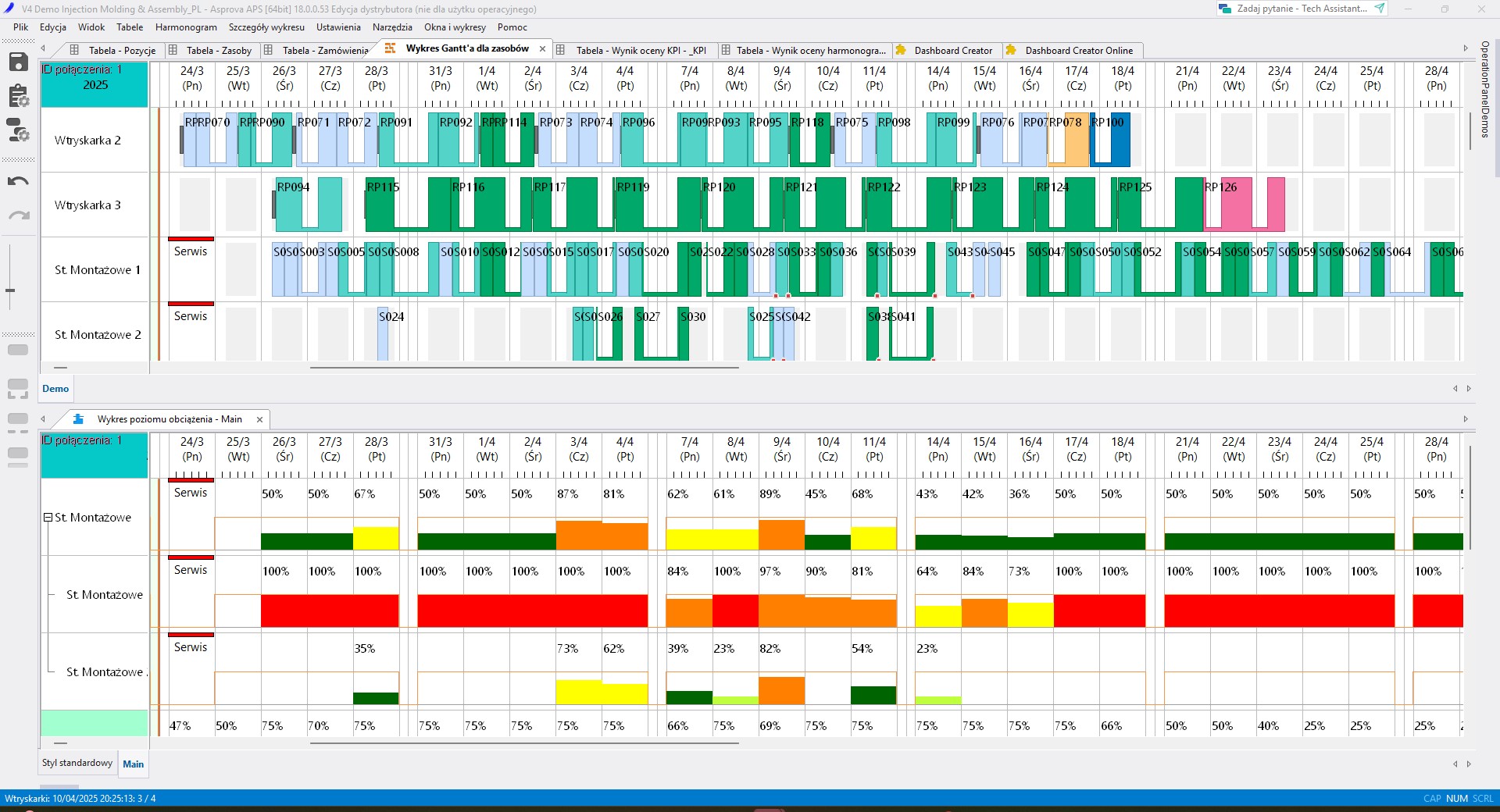
ASPROVA APS displays the production schedule as a Gantt chart, helping planners identify bottlenecks and risks to on-time order fulfilment more quickly. The visualisation covers all activities involved in completing a production order and lets you analyse both current and future production.
The Gantt chart in ASPROVA APS presents the planning result in a graphical layout that reflects the sequence of operations, resource load and order progress. The system aggregates data and adapts views to the user’s needs, for example by resource, order, operation or due date.
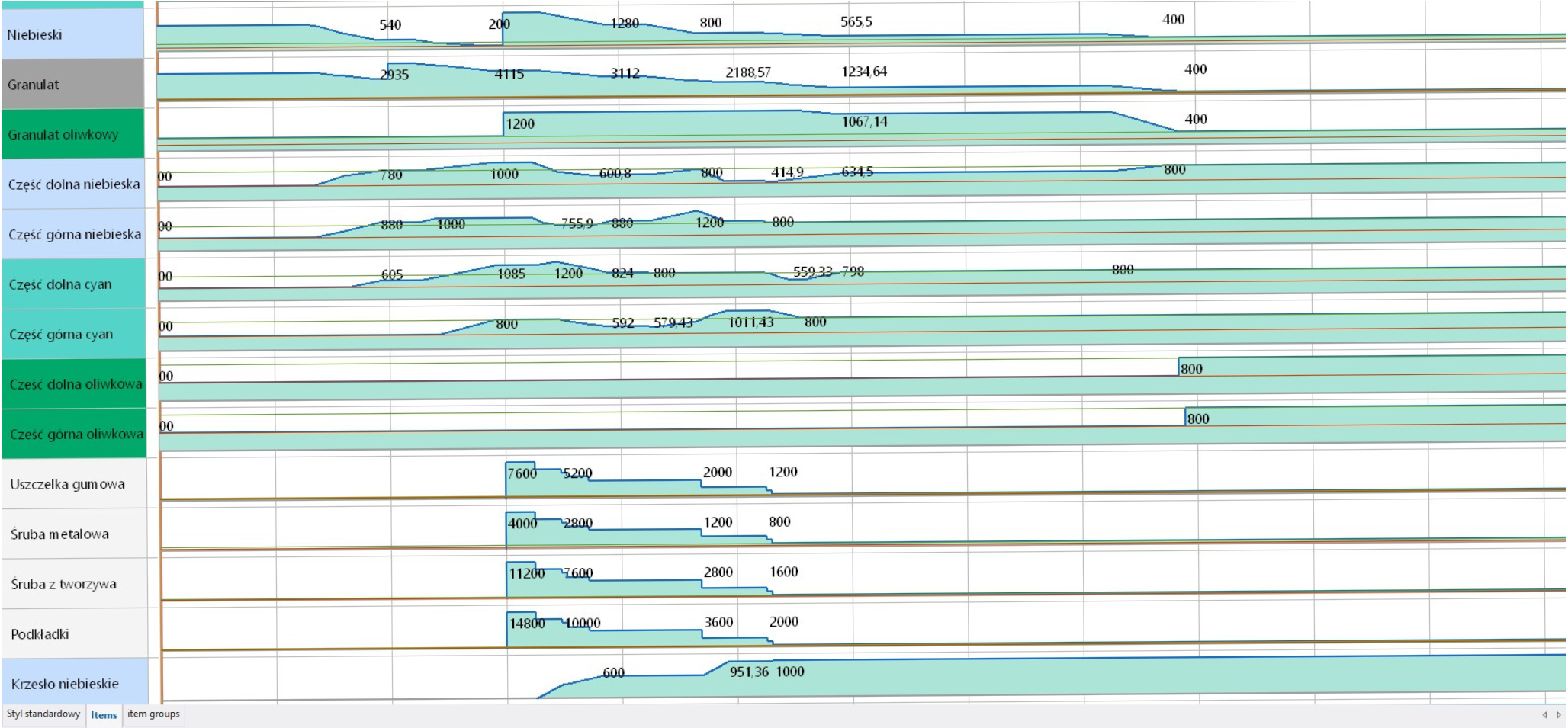
ASPROVA APS evaluates the production schedule against around 100 financial and organisational Key Performance Indicators (KPIs), calculated for the entire plan or for individual orders, resources and products. Comparing KPIs across plan variants lets you assess turnover, costs, profits, on-time delivery, lead times, production cycle length, idle time, the share of changeover time in the cycle, inventory quantity and value, and more.
What-If Simulations: Test Scenarios Before You Decide
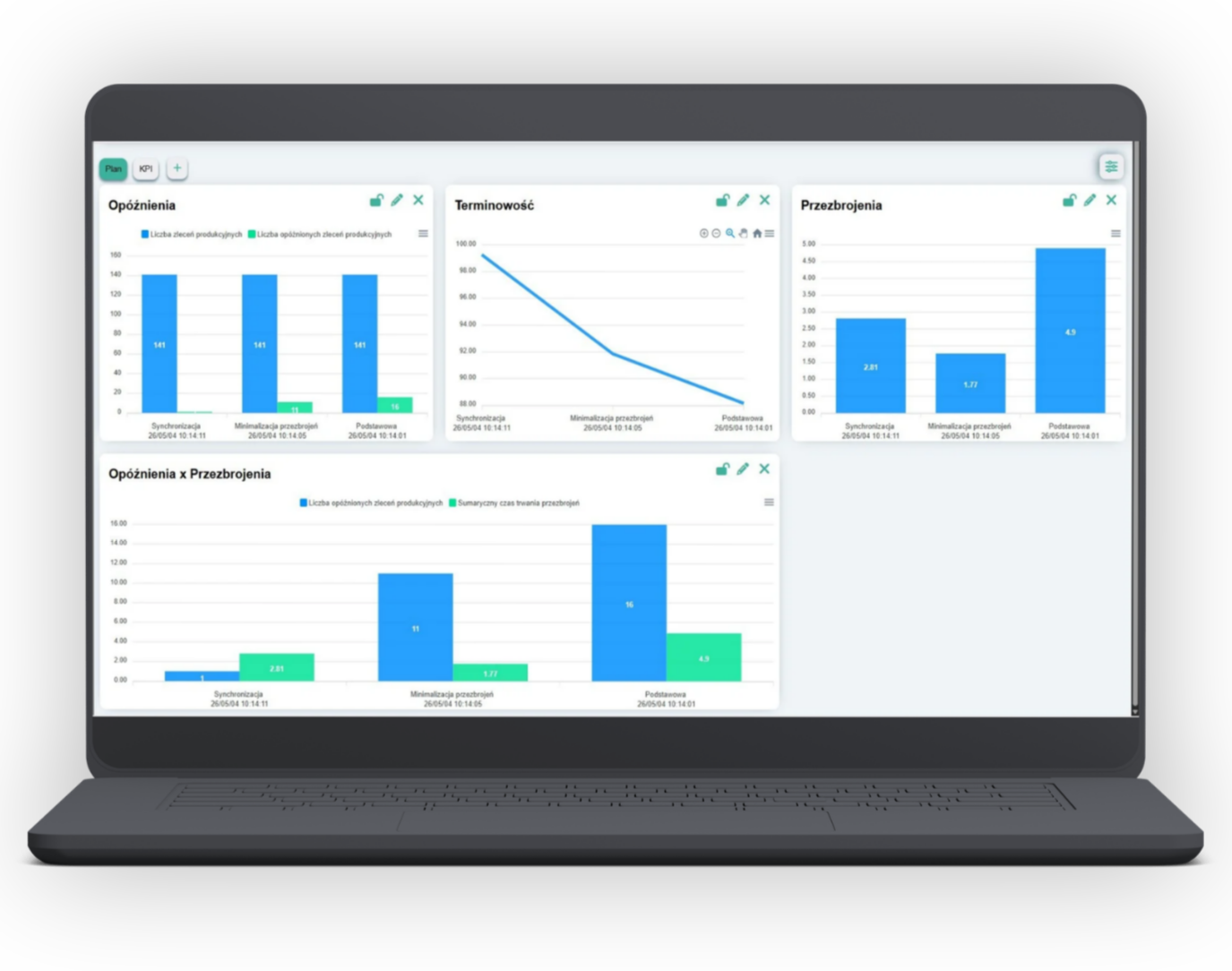
ASPROVA APS compares different production schedule variants before an operational decision is made. What-if simulations show how a change to the plan may affect costs, lead times, inventory levels and potential bottlenecks.
The system creates detailed planning scenarios, which the planner then analyses for their impact on the business.
Comparing variants lets you choose the schedule that best fits your current business goals, such as shorter lead times, lower inventory, reduced costs or an optimised sequence on bottleneck resources.
How Does ASPROVA APS Support Lean Management and Kaizen?
ASPROVA APS supports Lean Management and Kaizen by combining advanced production planning with a continuous improvement approach. The system is aligned with the Theory of Constraints (TOC). ASPROVA helps you make the most of critical resources, even when bottlenecks shift with your current order portfolio. The system helps companies make their production processes more flexible and predictable, and analyse how improvement initiatives affect resource utilisation and productivity.
ASPROVA APS was developed in close collaboration with Japanese manufacturers representing the most important industrial sectors. The system is continuously evolving and reflects the principles of Lean Management, an approach focused on improving processes, reducing waste and making better use of resources.
As an APS (Advanced Planning and Scheduling) system, ASPROVA combines hands-on industrial experience with proven production management methods. It supports companies in planning and scheduling processes where the key priorities are:
- production flexibility,
- predictable order fulfilment,
- efficient use of resources,
- company-wide productivity,
- continuous process improvement in line with the Kaizen philosophy.
ASPROVA APS helps you verify how Kaizen initiatives affect production results, including the utilisation of individual resources and overall company productivity.
Integration with ERP, MES, WMS, CMMS, BI
ASPROVA APS can serve as a central planning tool integrated with:
- ERP systems, such as SAP, INFOR, IFS, COMARCH, Impuls / BPSC ERP, Simple.ERP, Graffiti.ERP and Microsoft Dynamics 365
- as well as MES, WMS and CMMS systems
The system uses data on orders, routings, material availability, stock levels, operation progress and machine breakdowns to create an up-to-date production schedule.
ERP integration provides the master and transactional data needed for planning. The MES connection lets you compare the plan with actual production. The WMS supplies information on materials to be issued: what needs to be moved, where and when. CMMS integration makes it possible to account for inspections, breakdowns, overhauls and temporary machine shutdowns. Planning data from ASPROVA APS can also be passed to BI tools to support the analysis of KPIs, on-time delivery, inventory and resource utilisation.
What Does an ASPROVA APS Implementation with eq system Look Like?
An implementation that delivers the first benefits takes 3 to 8 months.
The project is focused on concrete improvements, achieved by modelling your company’s actual processes, resources and production constraints.
ASPROVA APS replaces manual planning or simple order queuing in ERP with data-driven scheduling. Among other things, the system takes into account machine availability, routings, stock levels, orders, employee skills, maintenance and quality control.
The result is a planning environment that lets you create feasible schedules faster, test different plan variants and respond to changes in production.
Which APS Implementation Methodology Should You Choose: Waterfall or Agile?
An APS implementation can follow either a Waterfall or an Agile methodology. The choice depends on the scale of the project, the number of systems to be integrated, data quality and the organisation’s readiness to make decisions.
The Waterfall methodology works well for large, complex projects, especially when APS is implemented alongside MES, WMS or a new ERP system. In such cases, the scope, integrations, project phases and dependencies need to be planned in detail.
The biggest advantage of the Agile approach is the ability to quickly reverse flawed conceptual decisions. The company doesn’t have to model the entire factory from day one. It can start with a small slice, learn the system, improve its data and only then extend the solution to other areas.
What Data Do You Need to Implement ASPROVA APS?
Implementing ASPROVA APS requires data that describes how production actually runs: orders, routings, operation times, machine capacity, changeovers, material availability, stock levels, resources, tools and the skills of employee groups. The quality of this data affects how quickly the system can be configured and how reliable the schedule will be.
What matters most is not simply transferring data from ERP, but cleaning it up and checking it against how the plant actually operates. The data must reflect how production runs in practice: which operations depend on one another, which resources are interchangeable, where constraints arise and which parameters affect an order’s due date.
The sooner the client provides complete and consistent data, the more smoothly the model configuration, scenario testing and system go-live will run.
ASPROVA is also an excellent tool for verifying the quality of production data and identifying the changes needed to make scheduling more precise. So there’s no reason to wait: the sooner your company starts verifying its data and implementing APS, the sooner you’ll see which areas of planning need attention.
Who Should Be Involved on the Client Side?
On the client side, the ASPROVA APS implementation should primarily involve production planners, production managers, process engineers and the people responsible for source data and integrations. They know the actual production capacity, machine constraints, process flows and the exceptions that aren’t always visible in the ERP system.
Planners verify the scheduling rules and plan logic. Process engineers help model routings, operation times and process dependencies. Production managers check that the model reflects the reality of the shop floor. The people responsible for source systems support the data flow between ASPROVA APS and ERP, MES, WMS, CMMS or BI.
The client team’s involvement is especially important during process analysis, data preparation and scenario testing. It is at these stages that the company’s operational knowledge determines the quality of the planning model.
Self-Service Configuration: What Does "99.9% Without IT" Mean?
Configurability in ASPROVA APS means that most system settings can be changed without involving the IT department. A business user, such as the lead planner, can modify parameters (ASPROVA has more than 7,000 of them), add new ones and use them in scheduling functions, giving them real influence over how the schedule is shaped.
In practice, “99.9% without IT” means less reliance on the IT department for day-to-day operational changes. Planners can update parameters for machines, resources, products, process constraints, material balancing rules and simulation variants.
This allows ASPROVA APS to grow with your company. When a new machine or a new routing is introduced, or you need to test a different production variant, the user can adapt the model without rebuilding the entire solution.
What Are the Results of Implementing ASPROVA APS?
The result of implementing ASPROVA APS is a production schedule based on the plant’s real constraints. The system lets you recalculate plans faster, compare what-if scenarios and respond to changes in orders, materials, machine availability or production priorities.
In a sample scenario, recalculating the schedule for the full order volume across 100 machines takes around 20 seconds. This response time lets planners analyse more plan variants and select the schedule that best fits the company’s current goals more quickly.
ASPROVA APS supports the shift from reactive planning to data-driven planning. Instead of manually adjusting order queues, your company can test variants, identify constraints and make decisions based on an up-to-date production model.
- Opracowanie: Zespół ekspertów eq system
- Weryfikacja merytoryczna: Tomasz Babiarz ekspert
- 16/07/2026
Find out whether ASPROVA APS is the right fit for your company. Once you submit the form, we’ll get in touch to::
• understand how your company operates and the challenges you currently face,
• assess whether our solution meets your needs,
• demonstrate the system’s capabilities using examples similar to your business,
• prepare an initial recommendation and an indicative quote.
What ASPROVA APS Users Say
Implementing ASPROVA APS at Sohbi cut the time needed to collect and analyse data by 50%, reduced production plan preparation time by 60% and lowered the number of changeovers by 40%. “ASPROVA APS gave us flexibility during the pandemic, when the entire market was struggling with raw material availability and maintaining supply chain continuity. Optimising and flexibly managing production and inventory became even more important than before, and thanks to the system, Sohbi Craft Poland adapts efficiently to an extremely fast-changing environment.”

Plant Director, Sohbi Craft Poland sp. z o.o.
Industry: Automotive
Implementing ASPROVA APS at Bury cut the time needed to create and verify the schedule from 4 days to 2 hours, reduced inventory levels by 40% and expanded the number of planned resources from 8 to 60. “We’ve gained more flexibility towards our customers. We no longer have to freeze our schedule for a full four weeks. We’ve now achieved two goals: a longer planning horizon combined with a shorter plan freeze period.”

Head of Logistics Division, Bury sp. z o.o.
Industry: Automotive
“One of the key benefits of implementing ASPROVA APS at Belma Accessories Systems sp. z o.o. is a lead time reduction of around 30%, thanks in part to an exceptionally detailed breakdown of production stages, at a level that was not possible when planning in the ERP system.”

Chief Production Planning Specialist
Belma Accessories Systems sp. z o.o.
Industry: Metalworking
ASPROVA APS also means precise delivery dates. Previously, since not all processes were planned, dates were calculated from approximate values. Now, an order fulfilment timeline is sent out within 48 hours of an enquiry. “Looking at the events of recent years and the resulting disruptions to supply chain continuity worldwide, I know that it was above all thanks to ASPROVA that we were able to maintain production continuity and on-time delivery.”

Supply Chain Director, Masterpress S.A.
Industry: Printing